
A part of the ‘Not Quite What You Meant’ series
By: Ezra Nadav
We need to start calling it what it is.
When someone hangs a Nazi flag in a suburban window, scrawls a swastika on a public bench, or wears a patch glorifying white supremacy, the typical response, especially in polite, progressive circles, is that it’s “offensive.”
But “offensive” is the wrong word. It makes it about us, about our feelings. About being upset, or uncomfortable. As though what’s happening is a matter of taste or manners.
As though it’s just a difference of opinion.
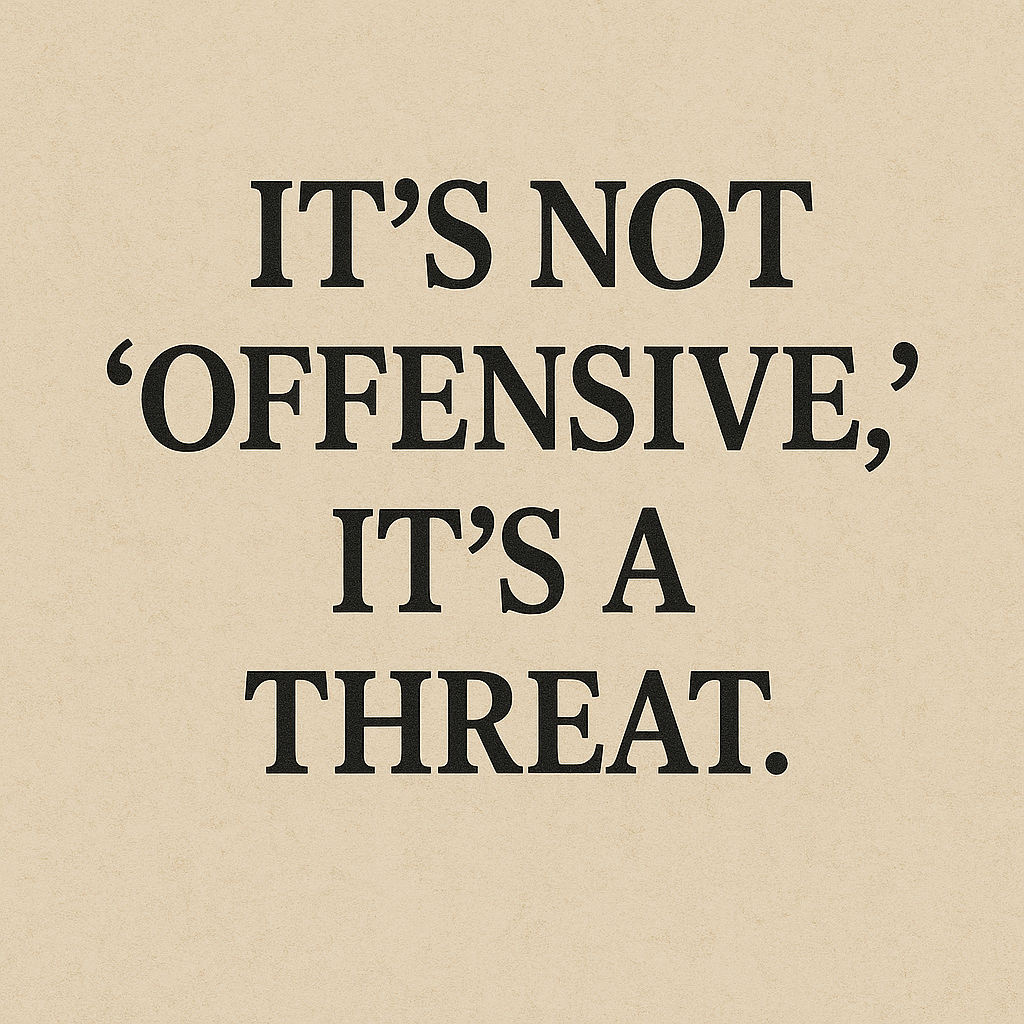
But what these displays represent is not a feeling. It’s a threat. A promise of violence. A signal of exclusion. A provocation that draws its power from historical atrocities and present-day fear.
Let’s be clear: when hate symbols are displayed, whether it’s a swastika, a Confederate flag, or any emblem explicitly tied to racist, antisemitic, or radical nationalist ideologies, they are not merely acts of self-expression. They are assertions of dominance. They are meant to intimidate.
And they do intimidate.
They remind people, Jewish people, that there are still those among us who fantasise about a world where we are not only unwelcome, but eradicated. That we are surrounded by those who don’t see our humanity as equal, or even as real.
So when someone tries to wave away these acts by calling them “provocative” or “inappropriate,” they’re missing the point. This isn’t about offence. It’s about danger.
Calling it “offensive” may feel more comfortable. It may be easier to slot into a values-neutral debate about free speech, or to file away under “problematic but not illegal.” But that framing softens the blow and blunts our response. And that’s exactly what the people displaying these symbols want.
Because if we treat hate as merely rude or upsetting, we avoid confronting it as the public safety issue it is. We distance ourselves from the people most at risk. We argue over the symbol rather than what it symbolises.
We don’t need more conversations about whether people “have a right” to display hate. We need stronger legal and social consequences for when they do. The line should not be drawn at offence, it should be drawn at harm.
Free speech is not a shield for terrorising communities. Not when the speech in question draws on historical violence, glorifies mass murder, or lays the rhetorical groundwork for future attacks.
The people who fly these flags and wear these emblems want to be taken seriously by their fellow extremists and not taken seriously by everyone else. That’s the game. And it’s time we stopped playing along.
This isn’t about policing thought. It’s about confronting action.
Displaying emblems of hate is not a passive act. It’s not theoretical. It’s not an “idea we disagree with.” It is a deliberate decision to bring a violent ideology into public space. To make people look at it. To make people feel it. And to make some people fear it.
Because that’s what hate symbols are designed to do. They’re not neutral. They’re weapons of psychological warfare.
And for the people who are targeted, this isn’t academic. It’s not a debate. It’s the sick feeling in your stomach when you walk past a shopfront with a swastika in the window. It’s the hesitation before entering your synagogue. It’s the fear of being followed home, harassed, or worse. That fear doesn’t come from nowhere. It’s earned, through generations of trauma and the real, continuing threat of violence.
That’s why language matters. Because when we reduce these displays to being “offensive,” we de-escalate the seriousness of the harm. We invite indifference. We allow the privileged to shrug and say, “It’s just a symbol.” But for those who know what these symbols stand for, who’ve seen where this road leads, it’s never just a symbol.
We must shift the conversation. From feelings to impact. From discomfort to justice. From appeasement to accountability.
If someone posted an anonymous death threat on your front door, you’d call the police. If someone painted a swastika there, should that be treated differently? Why?
We can’t keep pretending that because someone didn’t say the quiet part out loud, the message wasn’t received.
And we must hold our institutions to account too.
When governments hesitate to ban establish and new hate symbols, or when police fail to act on threats made visible, they send a chilling message: that some lives are still negotiable. That some people must continue to prove their right to safety, over and over, in the face of rising hate.
This is not alarmism. It’s pattern recognition.
History shows us that hate always starts with symbols. With uniforms. With flags. With rhetoric. With the slow, calculated normalisation of what should be unthinkable.
So let’s not wait.
Let’s stop calling it offensive.
Let’s name it as the threat it is.
Let’s demand laws that reflect the reality of that threat.
And let’s protect people, not symbols, not ideologies, not fragile freedoms built on someone else’s fear.
So on second thought, don’t call it offensive.
Call it what it is.
Call it dangerous.
Call it criminal, where laws allow.
Call it hate.
And respond with the strongest measures our society can muster, not just to protect feelings, but to protect lives.
Because if we are serious about living in a society where all people are safe, valued, and free, then we must be just as serious about confronting the people and symbols that threaten that safety.
Especially when those symbols pretend to be nothing more than speech.
Shalom Aleichem
 On Second Thought
Leave a comment