by Ezra Nadav
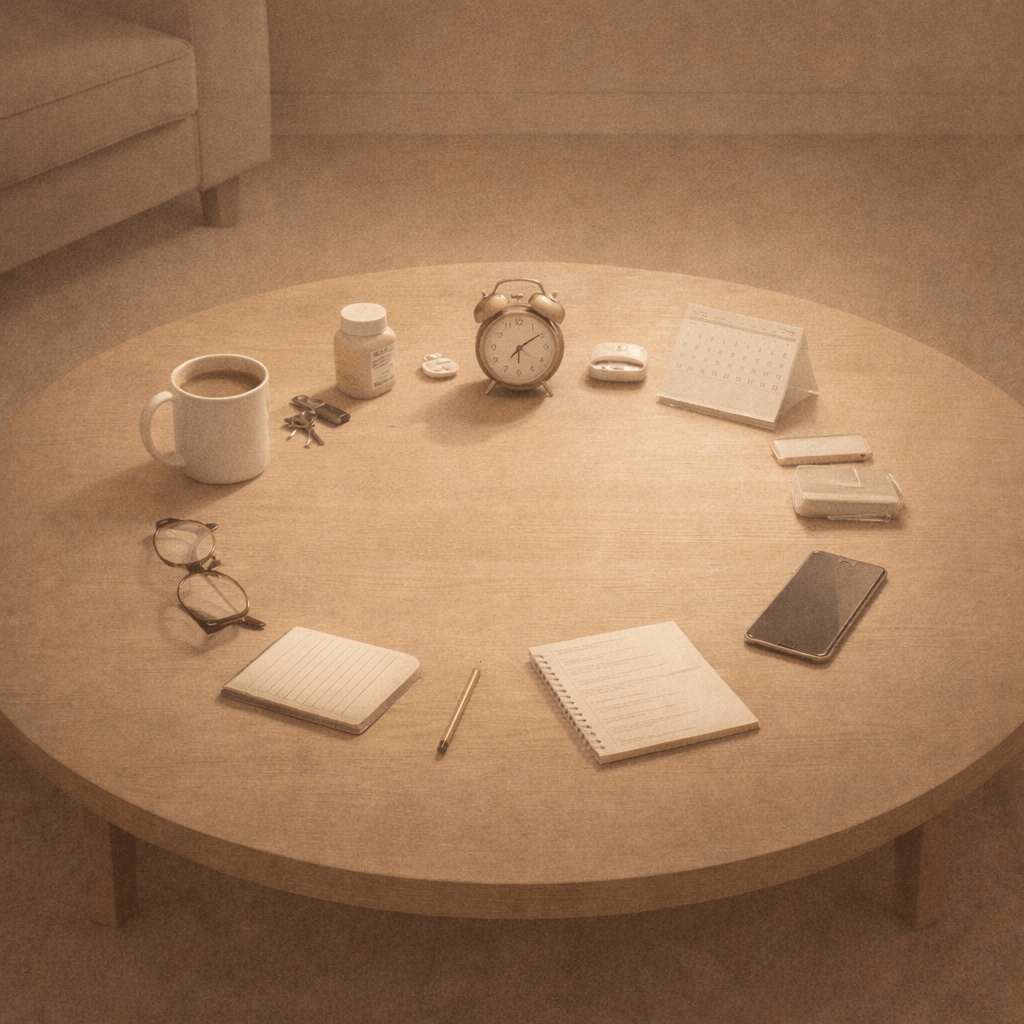
This short series sits with an idea many of us have absorbed without examining: that an ordinary life is something to outgrow. Across these reflections, I explore how the mundane came to be misread as nihilism or settling, how constant optimisation reshaped our sense of worth, and why adequacy, maintenance, and repetition have been quietly devalued in contemporary life. These pieces aren’t arguments for smaller lives, nor invitations to disengage. They are attempts to think more honestly about what sustains us, what exhausts us, and what it might mean to live well without needing to be exceptional.
Part I — The Ordinary Isn’t Broken
Why mundane is not nihilism, and how “enough” became suspect
Part II — When Optimisation Becomes Identity
How productivity culture colonised the self
An exploration of how metrics designed for systems were quietly applied to people — and how self-worth became tethered to output, growth, and visibility.
Part III — The Violence of “More”
What constant escalation does to nervous systems, relationships, and meaning.
The psychological and ethical cost of never being allowed to arrive, rest, or repeat.
Part IV — Maintenance Is Not Stagnation
Why care, repetition, and repair are the real work
A reclaiming of maintenance — domestic, relational, bodily, institutional — as morally serious labour, not a failure of ambition.
Part V — Adequacy Without Apology
Letting a life be sufficient in a culture that profits from dissatisfaction
A direct confrontation with shame, comparison, and the quiet grief of feeling “behind” in lives that are already full.
Part VI — Depth Over Spectacle
Why meaning accumulates slowly, not dramatically
A pivot toward depth, continuity, and trust — and why peak experiences are a poor substitute for sustained belonging.
Part VII — Choosing a Life That Holds
What it means to live well without needing to be exceptional
A closing reflection that integrates growth and sufficiency — resisting both nihilism and hyper-aspiration.
Epilogue
The Work That Doesn’t Show
A brief reflection on invisible labour, quiet endurance, and lives that are never optimised
 On Second Thought