
Part of the ‘Not Quiet What You Meant’ series
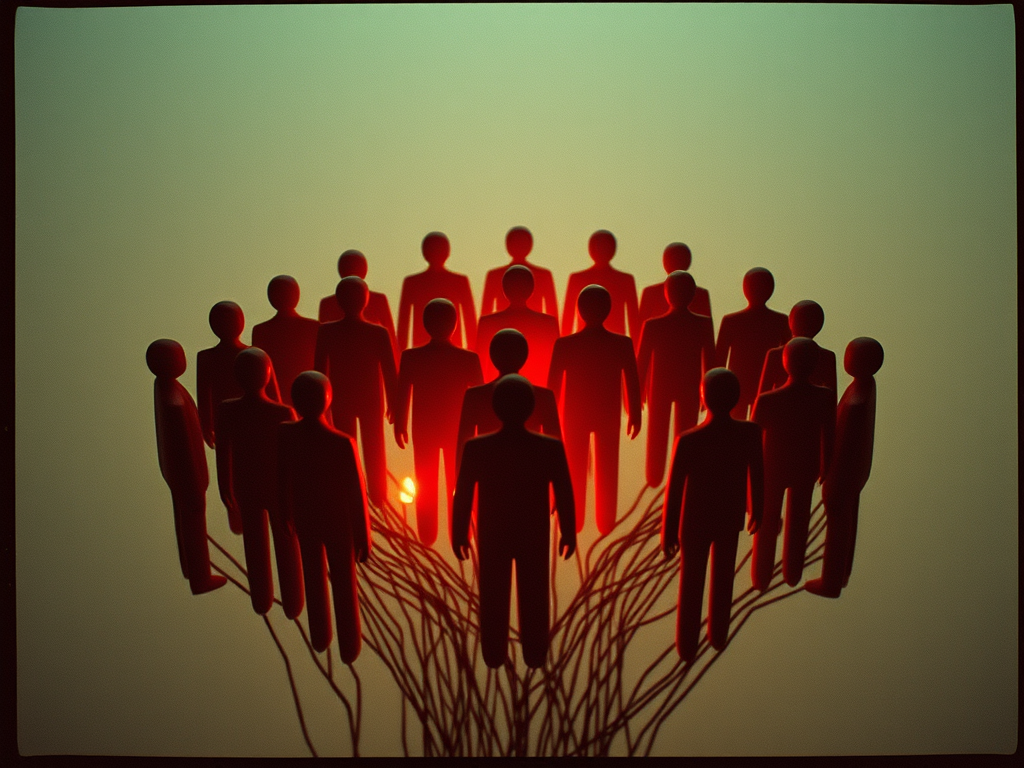
By: Ezra Nadav
We all crave belonging. It’s a fundamental human need, to be seen, to be valued, to find our people.
But what happens when the communities we turn to for safety and solidarity begin to turn on us? What happens when identity becomes armour, pain becomes power, and group loyalty overrides truth?
In communities forged around shared struggle or marginalisation, whether cultural, political, religious, or ideological, it’s easy for solidarity to harden into tribalism. What begins as connection rooted in care can shift into control disguised as cohesion.
When Identity Becomes a Cage
These communities often begin with righteous intent. They are formed in response to exclusion, misunderstanding, or injustice. And for many, they offer a lifeline. But over time, a singular narrative can take hold, one that doesn’t just bind people together, but binds them in place.
When victimhood is treated as moral superiority, pain becomes the price of entry, and the currency of belonging. Questioning this narrative, or offering a different perspective, is not seen as growth but betrayal.
The space between loyalty and authenticity narrows. And within this pressure cooker, toxic relationships thrive.
The Characters We Become
In the theatre of group dynamics, certain patterns of behaviour tend to emerge, recurring roles people unconsciously step into to navigate complex, often unspoken expectations. These aren’t fixed identities or diagnoses, but social scripts shaped by experience, fear, and survival:
- The Charismatic Victim: Someone whose pain becomes a source of moral authority. Instead of healing, their story is wielded as leverage, controlling others through unchallengeable grievance.
- The Unquestioning Enforcer: A person who upholds the group’s dominant narrative with intensity, often out of fear of exclusion. They silence dissent not because they are cruel, but because they are afraid.
- The Passive Accommodator: One who senses the dysfunction but avoids conflict. They minimise harm for the sake of harmony, even if it means swallowing their voice.
- The Fragile Leader: A figure who conflates accountability with attack. They retreat into defensiveness, surrounding themselves with approval rather than engaging with discomfort.
These characters don’t arise in a vacuum. Often, they’re shaped by real wounds. But when a community rewards emotional manipulation, groupthink, or self-erasure over reflection and dialogue, these roles become rehearsed, entrenched, and hard to step out of.
When Organisers Lose Control
Here’s a hard truth: many of these communities become things their original organisers never intended, and can no longer control, and that’s not their fault.
A founder may begin with a vision of care, healing, or collective empowerment. But communities take on lives of their own. And when unspoken hierarchies, unchecked pain, or social dynamics rooted in fear take hold, even the most well-meaning leaders can find themselves sidelined, silenced, or overwhelmed.
This isn’t always about failed leadership. It’s about the nature of group psychology. Communities can evolve into something that no longer reflects the values of those who created them. And it’s not always the fault of those at the helm.
The High Cost of Silence
Not all harm is loud. Some of the most toxic dynamics unfold in whispers, exclusion, and performative empathy. You may find yourself constantly managing someone else’s emotions, walking on eggshells to avoid setting them off. What starts as compassion becomes self-censorship.
You try to raise a concern gently and are met not with dialogue, but defensiveness. You express discomfort, and somehow you become the problem, for not saying it the “right” way, or for upsetting the group’s fragile equilibrium.
Boundaries are ignored or minimised. Apologies, when they come at all, are performative or laced with guilt-tripping. You begin to question your own perceptions, unsure whether what you’re feeling is valid. And often, those around you, people you assumed were allies, choose silence over support.
These dynamics continue not only because of overt control, but because so many enable them with their absence, their avoidance, or their complicity.
Signs the Community Is No Longer Safe
- Dissent is punished, not welcomed
- Vulnerability is exploited for power, not nurtured for healing
- Pain is weaponised to silence others
- Loyalty is tested through self-abandonment
- Group identity overrides individual accountability
These aren’t signs of a healthy space. They’re symptoms of a system that’s lost its moral compass, where the narrative of safety has become a shield for control.
What Healthy Belonging Looks Like
True community doesn’t demand your silence or performance. It invites your complexity.
It creates space for both shared values and honest difference. It allows you to say, “I believe in what we’re building, and I also believe we can do better.” It makes room for feedback, boundaries, and repair. It asks not for perfection, but presence. Not for alignment at all costs, but for connection rooted in mutual respect.
Healing communities aren’t perfect. But they’re humble. They prioritise curiosity over control and compassion over correctness. They remind us that:
If we can’t build spaces where people can disagree, grow, and be held accountable with dignity, we’re not building community—we’re building conformity.
And that’s not what we’re here for.
Shalom Aleichem
Footnotes
- Haidt, J. (2012). The righteous mind: Why good people are divided by politics and religion. Vintage.
- van der Kolk, B. (2014). The body keeps the score: Brain, mind, and body in the healing of trauma. Penguin Books.
- Sacks, J. (2003). The dignity of difference: How to avoid the clash of civilizations. Continuum.


 On Second Thought
Leave a reply to Jyoti Santosh Cancel reply